
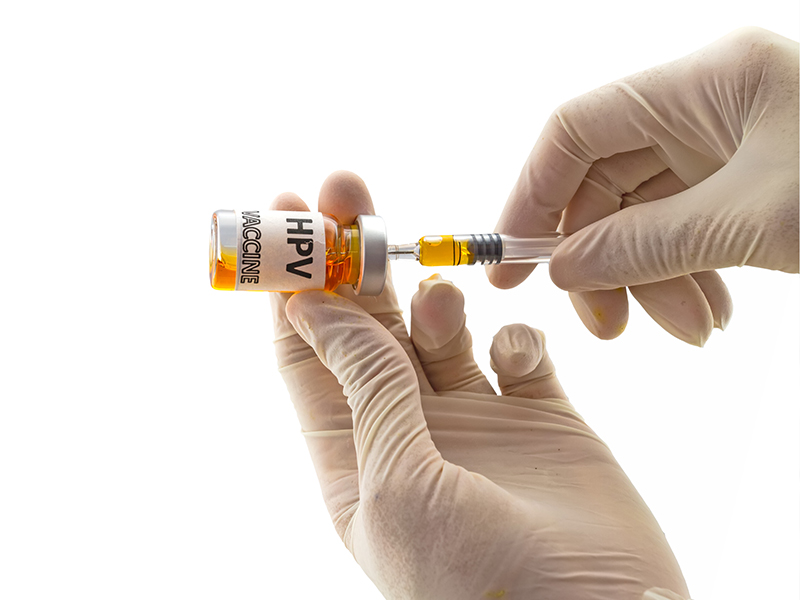
A scare campaign is now being waged against animal experiments. Many people, politicians among them, are falling for it without knowing the facts. The horror stories have no basis, some of the arguments are simply false, and the new initiatives to further restrict animal experiments by law endanger our health.
Alex Tsafriri | "HaTzofe", Friday, 5 Shevat 5762, 18.1.02
In recent weeks, the biomedical research community has been slandered and attacked by extremists of the Israeli Society Against Animal Experiments and their supporters. But during this campaign, its organizers tend to hide a few basic facts. The public, which benefits from the achievements of biomedical science and from far-reaching improvements in its health and lifespan, tends to forget these facts, or does not know them.
One of the main elements in these activists' horror propaganda is the claim that laboratory animals are so different from humans that the results of experiments on them are of no importance for humans. The most prominent example, repeated again and again, is the tragic case of thalidomide. The drug was approved in Europe as a painkiller on the basis of animal tests. Indeed, once thalidomide came into use, many women were treated with it in early pregnancy to relieve the symptoms of early pregnancy ("morning sickness"). This treatment caused severe damage to fetal development and the birth of babies with damaged limbs.
Chilling, isn't it?
Well, the facts are that in this very case, the drug was not tested on pregnant laboratory animals, and it was not approved by the Food and Drug Administration (FDA) for use in the US. And the reason it was not approved for use in the US was that the FDA was not satisfied with the results of the experiments presented to it. So the most prominent example currently presented of the uselessness of early animal experiments is in fact evidence of the need for experiments of this kind. They must be thorough, extensive and in-depth. Any saving on the lives of animals may lead to incalculable harm and human suffering.
Indeed, later experiments in pregnant animals confirmed the damage to the embryos of mice, rats, hamsters and monkeys (see the literature below).
No early testing system (whether in animals or in humans), however sophisticated, can detect a unique sensitivity in part of the population. A clinical trial in humans, which should be carried out only after many extensive early tests in animals, is usually conducted on 3,000–5,000 people. A sensitivity that appears in only one person in ten thousand or a hundred thousand will sometimes not be detected. A delayed reaction that appears years later will also escape the notice of whoever is running the trial. The vast majority of the failures cited by activists against animal experiments belong to these categories. The rate of failures of this kind, which require a drug to be withdrawn, is estimated in developed countries at about 2%. Does this fact justify abandoning early animal experiments, or rather expanding and deepening them?
An illusion that activists against animal experiments like to spread is that there are substitutes for animal experiments, and that the "bad guys/butchers/sadists" (delete as appropriate, depending on how extreme the speaker is) in white coats rebel against this truth and refuse to use them. They propose using tissue and cell cultures, mathematical models and computer simulations. And there is something in this. Tissue and cell cultures, mathematical models and computer simulations have an important role, which keeps growing as our knowledge increases. However, it must be remembered that models and computer simulations are built on the basis of basic knowledge gained through meticulous experiments on animals. There is another small matter too: the organs and cells in culture also come from animals, and developing them requires a constant supply from laboratory animal breeding facilities.
But let us leave that aside and continue the discussion: these methods cannot, and will not be able to, replace the knowledge gained through experiments on a whole animal. As someone who has spent most of his adult life researching mammalian reproduction, and who is credited with developing methods for culturing eggs and parts of the ovary, I can testify that only an integrated approach to research, from the whole organism down to the molecules that make up its various cells, will lead to an understanding of the living world and to the development of methods of healing. Only in this way will it be possible to prevent diseases, improve living conditions and preserve a healthy and ecologically balanced environment.
This may come as a surprise to some readers who are shocked by the so-called evidence of animal torture, but many of the achievements of biomedical research are applied precisely for the health and welfare of animals. For example, about a third of the drugs developed are also used in veterinary medicine. In this field, vaccinating farm animals and pets is very common, and methods such as in vitro fertilization, embryo transfer and even cloning are used to preserve endangered animal species, all thanks to those "cruel" types in white coats.
Another "favorite" slur, though relatively harmless, is the catchy formula "experiments = papers = degrees = a living". According to this claim, the scientist lies in wait for animals in order to torture them, and the more he tortures them, the more papers he publishes, the higher he rises in the academic ranks, and the more grants he receives to increase the suffering of laboratory animals. There is no doubt that this slogan is meant to wipe out all biomedical research. Experiments in these sciences are meant to gain understanding and knowledge of the living world.
Publishing them in the scientific literature makes it possible to apply the central test of science: confirming and refuting assumptions and facts. In addition, publication makes it possible to identify original and creative researchers and give them working conditions (an academic appointment and research grants). One of the criteria that every reviewer of a scientific paper checks, as a condition for publication, is whether the researchers took care to ensure proper treatment and welfare of the laboratory animals according to the established rules, and received approval to carry out the experiments from their institution's ethics committee for laboratory animals.
And one more thing: publications in the scientific literature are open to anyone who wants to read them, so the lie spread by those activists for ending experiments, about the secrecy of experimenters' work, does not stand up. Even so, the extremists opposed to animal experiments and their supporters in Israel, like their counterparts abroad, use tactics of intimidation, incitement and personal humiliation of individual researchers. And so the system of "persuasive" arguments has included attacks and letter bombs sent to researchers, and labs blown up and set on fire, some of which resulted in harm to researchers and laboratory animals. This is why breeding facilities in Israel and abroad are now surrounded by fences. There is no choice but to protect them from the excess of "love" of the animals' defenders. Several of my colleagues and friends and their labs around the world have "enjoyed" treatment of this kind.
I suggest that anyone whose heart is still drawn, despite everything said so far, to the arguments of activists for ending animal experiments, ask themselves why this group decided to attack specifically the essential use of animals in research, which according to reasonable estimates amounts to only about 3 thousandths of the number of animals used for food. Yes, three thousandths: that is not a typo. Have they identified an easy target? Are they counting on the fact that the public is unaware of the terrible death toll from epidemics in the not-so-distant past? Do they know the figures on the deaths of mothers and babies in childbirth in the past, or the figures on diseases that still claim many people's lives in developing countries? By the way, these organizations also oppose keeping pets at home and hope to put an end to this "human whim" that brings their owners great pleasure. Moreover, in their publications against animal experiments they talk mainly about monkeys, cats and dogs, and forget to mention that their total share of laboratory animals is estimated at about half a percent. Yes, half a percent of three thousandths. Do the math yourself.
The philosophy behind the arguments of activists for ending animal experiments is no less baseless than their actions and their understanding of the life sciences. In the name of "animal liberation", they claim equal moral status for humans and animals. The fact that animals also feel pain and distress does indeed justify compassion and preventing animal suffering, as expressed in the Jewish tradition in the laws of slaughter, of sending away the mother bird, of mixing species, and "You shall not muzzle the ox when it treads out the grain". However, a clear distinction must be made between human awareness and capacity for moral judgment and those of animals. The not-so-distant past taught us the disastrous and horrifying consequences of blurring the line between human and animal, of losing our humanity and respect for the sanctity of human life. There are people among us who carry on their bodies the scars of experiments carried out on them instead of on animals, and others in whose nightmares the German cry "Mensch, fass den Hund!" ("Man, seize the dog!") still echoes.
If the residents of the State of Israel and their elected representatives want to continue enjoying medical services that are constantly being improved thanks to biomedical research, and to enjoy the success of an advanced biotechnology industry, they must allow the use of animals in research to continue. Remember that the development of vaccines for your children, for you and for the animals in your homes and on your farms, hip replacements and other implants, and the prevention and treatment of osteoporosis in your grandmothers and grandfathers (and the list is very long) are all based on, and depend on, ongoing research, including in animals. The laws and regulations adopted so far, and the oversight of the scientific and medical establishment in Israel and abroad, provide the proper framework. In any case, it is clear that the bodies that oversee and supervise this system must not include parties such as extremist activists who oppose these experiments on principle. It would be a disaster, and a death sentence for biological science in Israel, a serious blow to public health and to our hopes of joining the forefront of research and the biotechnology industry, if we were to impose further restrictions on the sensible use of laboratory animals in biomedical research. Very often, it is a matter of human life.
Publications on thalidomide (added in this version):
Dipaolo, JA (1963). Congenital malformation in strain A mice: its experimental production by thalidomide. JAMA 183:139-141.
King, CTG & Kendrick, FJ (1962). Teratogenic effects of thalidomide in the Sprague Dawley rat. The Lancet, ii:1116.
Homburger, F et al. (1965). Susceptibility of certain inbred strains of hamsters to teratogenic effects of thalidomide. Toxicol. Appl. Pharmacol. 7: 686-96.
Neubert, D et al. (1988). Embryotoxic effects of thalidomide derivatives in the non-human primate Callithrix jacchus. II. Elucidation of the susceptible period and of the variability of embryonic stages. Arch Toxicol. 61:180-9.