
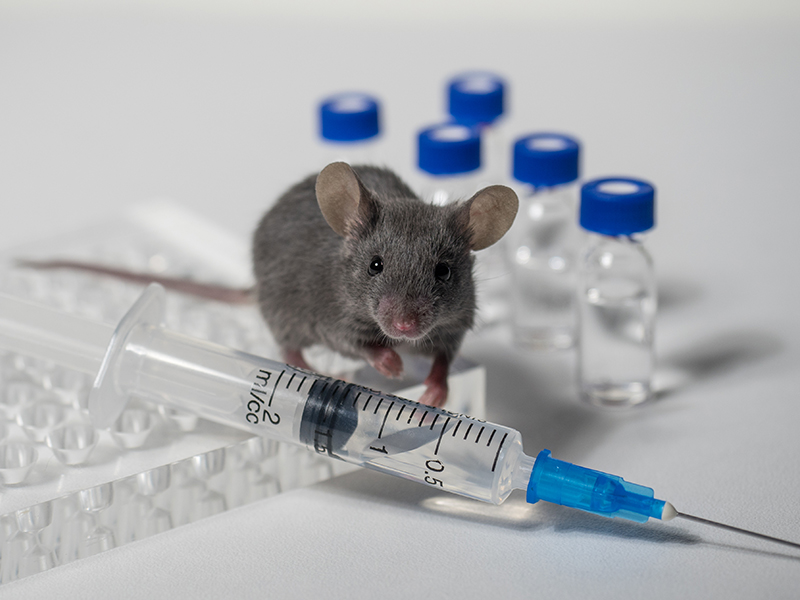
Animal research is carried out to improve the health and quality of life of all of us: the quality of life of people who use and consume a wide range of products every day without worry is secured by knowing that these substances have been tested and found safe.
• Basic biomedical research is essential for developing the pharmaceutical and biotechnology industries, which are needed to ensure Israel's medical progress.
• Over the years, animal research has been used to develop medicines and medical treatments, and it has contributed greatly to longer life expectancy and a better quality of life for all of us.
It is important to emphasize that science, as a human activity, is built and advances through competition and constant mutual review by peers who are experts in specialized fields of research. Peer review has proven very effective in advancing science, and we are confident that this mechanism is highly effective and also ensures animal welfare.
Universities in Israel operate according to the Animal Welfare Law (Experiments on Animals), 1994, in everything related to conducting animal experiments. The experiments themselves are carried out by skilled, high-quality professionals, using anesthetics and pain relief in order to minimize the animals' suffering during the research process.
Laboratory animals are kept according to the rules and regulations set by the US National Research Council, while reducing the number of animals in each experiment and using technological alternatives to animals wherever possible.
Care of laboratory animals
The Inter-University Forum for the Advancement of Medicine has adopted the strictest regulations required for protecting and caring for animals, under controlled veterinary supervision. The experiments themselves are carried out by skilled, high-quality professionals, using anesthetics and pain relief in order to minimize the animals' suffering during the research process.
Laboratory animals are kept according to the rules and regulations set by the US National Research Council, while reducing the number of animals in each experiment and using technological alternatives to animals wherever possible.