
By Erez Raz
A combination of baseless and exaggerated claims, misunderstanding and hypocrisy drives the opposition to the use of animals in medical research and drug development. Is there a chance of a rational discussion that would also reduce the suffering of animals?
The agenda promoted by the societies opposing animal experiments, active in Israel and around the world, has destructive implications for the progress of basic and biomedical science. See, for example, the public statements by senior figures in educational institutions in Israel and around the world. These societies manage to achieve some success because they present partial or incorrect data in a populist way, persuade the public with arguments that are not based on facts and data, and describe a situation that does not reflect reality, using a host of arguments that stir emotional identification while ignoring, not knowing, or deliberately hiding important data. The ability of such societies to sway parts of the public stems from the fact that the truth is complex, and understanding it requires knowledge that goes beyond simple slogans. In addition, scientists show little motivation to respond to statements that are clearly baseless.
In numerical terms, laboratory animals make up 0.35% of the animals raised and killed by humans, mainly in the food industry, which is responsible for the deaths of 99.15% of the animals exploited by humans.
Relatively extensive explanations of the significance of animal research can be found online, so I will provide only the most basic information needed for an initial understanding of the subject.
The use of animals in biological research
Research in animals makes it possible to gain relevant knowledge about basic mechanisms, such as those that control cell division, regulate physiological conditions in the body (for example, blood sugar levels and blood pressure), and allow a response to external disturbances (for example, recovery from injury or infection). At the fundamental biological level, all these processes are controlled and carried out in an almost identical way in different animals, and the closer the animals are in evolutionary terms, the smaller the differences. For example, understanding the mechanisms that control cell division, cell migration or the formation of cancer metastases in the mouse allows a fundamental understanding of the parallel processes in humans and in other animals. This information is relevant, for example, for finding substances that selectively harm dividing cells, limit the formation of metastases or affect the ability of cells to survive in different environments: substances that may act against cancer cells. In the few cases where differences between organisms are found, the difference itself, and understanding the basis from which it stems, has great practical value. For example: why are some animals (fish) able to repair damage to muscle tissue, while a heart attack in humans is not followed by a process of regeneration of the damaged muscle and healing of the damage? Basic research on such questions makes it possible to define differences between systems and advances the development of solutions that will allow damage to be repaired. In cases of research into the formation of metastases, the link to medicine is clear, easy to understand and arouses less opposition. In other cases, the basic knowledge gained through experiments is used to understand biological systems. All medical breakthroughs rely on information obtained from basic science, even if at the start of the research it was impossible to foresee how the knowledge gained would be used. This is similar, for example, to setting out on expeditions to explore regions that have not yet been mapped, or to dissecting a body: journeys of exploration where it was not known in advance whether, or how, the knowledge gained would be useful in the future. Modern basic research makes use, among other things, of animals, in which highly complex basic processes are studied in the most relevant environment: inside the living body.
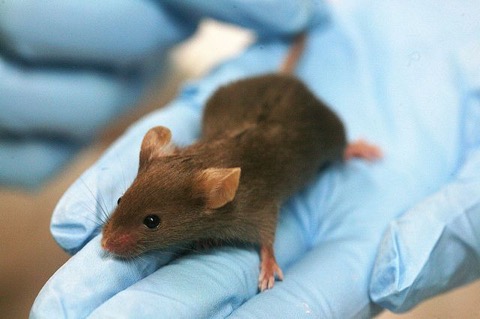
In numerical terms, laboratory animals make up 0.35% of the animals raised and killed by humans, mainly in the food industry, which is responsible for the deaths of 99.15% of the animals exploited by humans (according to data from Germany), and the relative share of laboratory animals is much smaller still if animals caught at sea are included in the calculation. In Europe, animal testing for the cosmetics industry has been banned. In basic research, the mouse is the most common laboratory animal, and smaller numbers of animals such as fish, guinea pigs, rats and rabbits are also used, while the number of monkeys (and we are not talking about apes) is less than a hundredth of a percent of the number of animals used in the food industry.
For many people, the importance of biological research lies in drug development, so I will explain the process that ends with a prescription at the pharmacy.
The basic research stage and its importance
Biological processes studied in basic research that deals with general processes almost always turn out to be relevant to diseases, because they almost always have clinical significance. In this way, the knowledge gained in basic research makes it possible to "define targets" for treatment, usually a small number of proteins out of thousands of possibilities. For example, the detailed understanding of how viruses from the wider family of the AIDS virus (retroviruses) multiply was achieved thanks to basic research that began more than fifty years ago. When the AIDS epidemic broke out, the virus responsible for it was discovered and defined thanks to knowledge that came from basic research. In societies where modern scientific research does not take place, explanations for the source of the disease ranged from witchcraft to punishment for homosexual relations. In modern basic research, which eventually led to the development of drugs that allow carriers of the AIDS virus to live full lives, various kinds of animals were used, including monkeys that are susceptible to a very similar virus. In terms of how it multiplies and how it damages the immune system, the virus that attacks humans is identical to the one that harms various animals, including rhesus macaques. It was basic research in various fields that made it possible to understand the mechanisms by which viruses infect and multiply, for example. This stage makes it possible to define specific targets: proteins that are important for the virus to multiply, in the case of the AIDS virus, or proteins that are important for cancer cells to multiply and form metastases, in research focused on understanding cell division or migration.
The screening and optimization stage
At this stage, based on basic research, the effort focuses on inhibiting or activating proteins that have been defined as important to the process relevant to the disease. For this purpose, cell cultures are usually used (a technique that requires extensive use of animal blood products, mainly from cows) to screen millions of substances and compounds that will bind to the target defined in basic research. Out of the millions of substances tested, a small number are selected and undergo chemical optimization using computer modeling, in order to produce similar but more effective and more specific substances. After further experiments, using various recently developed methods that involve animals (such as organs grown in culture, which, as mentioned, depend entirely on the massive use of animal products), a small number of substances, fewer than ten per target, will be tested in the next stages of development.
The preclinical stage: experiments in animals
The substances developed in the previous stage will be tested in animals such as mice and rats, and out of these an even smaller number of substances will be examined using animals that are closer to humans (in certain respects), such as rabbits and monkeys. Testing a potential drug on animals makes it possible, for example, to rule out toxicity resulting from harm to, or effects on, organs and systems that the drug was not aimed at, and to provide initial information about how effective the drug is in the complex system that is the living body. Once a scientific basis for continuing the drug's development has been obtained, the law allows a move to experiments in humans.
The clinical trial stage in humans, and production considerations
After the drug's effectiveness has been tested in humans, about ten percent of the substances will reach production. The fact that such a high percentage of potential drugs reaches production shows the quality and effectiveness of the screening: the chance that one out of ten substances chosen at random, without similar screening, would be active against a particular disease is practically zero. At the final stage, some of the substances are rejected for economic reasons, such as production cost and competition with existing products, patents and so on, as well as because of problems with effectiveness or side effects that are discovered only at the stage of experiments in humans (the mouse did not complain of nausea). Approval to market a substance as a drug is given only after clinical trials have clearly proven positive activity compared with an inactive substance.
In addition to enriching human knowledge, this sequence of steps has led to the development of tens of thousands of drugs that improve quality of life and extend life for most of humanity. None of the drugs used today (for example, drugs for treating cancer, AIDS, multiple sclerosis, cystic fibrosis and more) would exist without basic information and preclinical experiments in animals. The modern treatments that make it possible to cure disease, suppress it or extend life were developed thanks to the path described, the path accepted in developed countries. These are drugs whose effectiveness has been proven, unlike prayers and "alternative" medicine, whose effectiveness has never been proven. Because there is no other practical path for developing drugs, and despite the business motivation to make the process cheaper, it remains long and expensive and requires an investment of billions of dollars in the development of each drug. The societies for the prevention of animal experiments want to bring about a complete end to the use of animals in experiments, based on moral arguments according to which a mouse is equal to a human. To persuade the public, which for obvious reasons wants drugs and treatments to be developed, they spread information claiming that there are alternatives and other solutions that would allow science and medicine to advance without harming animals. Moreover, the societies even spread "information" claiming that the use of animals in biomedical research not only does not advance research, but actually delays drug development.
Without the ten drugs whose development involved the use of animals, there would not have been even one drug that could be tested in clinical trials in humans.
In order to decide on a course of action that weighs moral arguments against considerations of human welfare, society must discuss the issue on the basis of information (some of which I have provided here), and understand the nature of the "alternatives" and "other solutions". The number of mistaken and misleading statements the societies make to promote their goal is large, so, for reasons of length, I will focus on a small number of representative claims and discuss their validity.
First, the societies try to persuade by presenting statistical data in a distorted way, mixing unrelated issues. For example, one common claim is that because only one in ten drugs that come from animal experiments is approved after clinical tests in humans, the use of animals does not predict success in humans. I mentioned earlier the reasons why only one in ten such drugs reaches the shelf. In fact, without the ten drugs offered by the path described, the same path in which animals are used, there would not have been even one drug that could be tested in clinical trials in humans, and so drug development would not have been possible at all. The compounds that reach clinical trials reflect a selection from millions of possibilities aimed at a few targets, which were defined out of hundreds of thousands of possible targets (the number of different proteins in the body, for example). So a 10% success rate at the stage of clinical trials in humans reflects the elimination of billions of inactive compounds.
Another group of mistaken arguments relies on extremely rare and exceptional cases in which it turns out, after years of use, that some drug, out of tens of thousands of different drugs, has side effects even though it went through the testing path. This happens, and it is rare (for example, with the drug Vioxx), but what can be concluded from these cases? The societies present these rare failures as proof that animal experiments do not predict how safe a drug will be for humans. In fact, as I described, at the end of the testing path that leads to a drug being approved for general use, three stages of experiments in humans are carried out. If drugs that cause harm are indeed approved, the problem lies in the design of the experiments in these final stages, as a result of a mistake or the malicious hiding of data, and it does not reflect on the quality of the path in which animal experiments are involved. The final stage of development (phase 4 of clinical trials) includes long-term monitoring of side effects among people using the drug after it has been approved. At this stage, in a small percentage of cases, side effects are discovered that were not found in the earlier tests in humans.
At this stage, science still has no way to move forward without carrying out some of the experiments on animals.
According to another group of arguments, there is a conspiracy to use animals even though "alternatives" exist. In this version, the scientist is presented as a conservative who refuses to use new technologies and methods. To anyone who has not studied biology seriously, the terms "cell cultures", "tissue cultures", "organ cultures" and "test-tube research" sound like a wonderful alternative to using animals: no harm to animals, it is cheap and it solves everything. In this case, we are dealing with half-truths on several levels. First, these technologies were not developed by the societies opposed to animal experiments. They are technologies developed by those same conservative scientists, through significant breakthroughs that make it possible to carry out some experiments outside the animal's body. To develop these advanced methods, experiments were carried out on tens of thousands of mice, and once they had been developed, using them in practice requires, for example, large quantities of cow blood products. This is blood taken continuously from a cow or, alternatively, taken from calves during slaughter. So the "alternatives" also involve massive use of animals. These methods do indeed provide interesting information that is hard to obtain in other ways, but they in no way remove the need to test a drug's activity at some stage on a living body, on a whole animal, in all its complexity: the connections between different tissues and organs, motor activity, performing various tasks and so on.

It is important to note that scientists actually look for ways not to use animals in their experiments. Not necessarily for reasons of animal rights, but also for purely scientific reasons: animal products differ greatly from one another and make it hard to reproduce research results. But at this stage, science still has no way to move forward without carrying out some of the experiments on animals.
Another kind of claim relies on the opinions of others who supposedly "know the system from the inside" and reveal the truth. In this case, they are usually people who are not involved in relevant scientific activity that would allow them to understand the process. For example, doctors, or people who have left the biotechnology industry, who speak out against animal experiments. Even if we assume that doctors do have an understanding that allows them to challenge the existing process, why should we rely on a handful of them rather than find out what doctors who are familiar with the process really think? Either way, although doctors play an important role in the health system, their main role is not connected to drug development, so they are no more of a professional authority on the subject than any other professional.
If there were alternatives to the use of animals in biomedical research, economic motivation would lead to their adoption.
Sometimes selective quotations are used and things are taken out of context. For example, Professor Idan Segev of the Hebrew University, who has studied nerve cells in the spinal cord of the cat and nerve connections in the rat brain as part of the effort to understand how the brain works, found quantitative differences between human and mouse nerve cells. Knowing what a nerve cell is, and being able to know what to measure and how to interpret findings from human tissue, depend entirely on the understanding that has been gained, and continues to develop, through research using mice and other animals. The quantitative differences between animals can, for example, explain some of the differences between the thinking of a mouse and that of a human, and they do not cancel out the essential contribution of the mouse in the past and in the future. In this case, although Prof. Segev said that "with all due respect to this amazing animal that is so important to us (the mouse), it is still very different from us" and that "sometimes there are drugs that succeed in mice and not in humans", the misleading headline given to the article, quoted by the Israeli society against animal experiments, was "Why are animal experiments ineffective? An Israeli researcher has the answer".
The dishonesty of members of the societies against animal experiments is clearly expressed in the fact that many of them, and their family members, use drugs obtained in the way I have described, and in doing so knowingly fund similar future activity by the pharmaceutical companies. Their claim that "there is nothing else" or that "the animals that were used are already dead" is equivalent to preaching vegetarianism while eating a steak because "the cow is already dead".
We do not have to lead a lifestyle that exploits and tortures animals, and not all of us have to eat meat.
If there were alternatives to the use of animals in biomedical research, economic motivation would lead to their adoption. For example, keeping one mouse in laboratory conditions costs about $60 a year, after the construction of the expensive building and facility in which it and its companions are housed. Contrary to the conspiracy theories spread by the societies, no one in the system has any motivation to insist on the expensive use of laboratory animals; it is simply that at present there is no substitute for animals in basic research and preclinical research.
Scientists have a duty to explain the nature and importance of research to the general public, and not to ignore criticism, even if it contains little truth or honesty. Efforts must be made to "open the lab" as much as possible, while keeping visitors and animals safe. In this way, the decisions the public is expected to make on the subject will be backed by knowledge, and will not stem from the populist display of a monkey of unknown origin that has starred in these societies' posters for decades.
Almost every human activity involves harm to animals. Building roads, hotels and homes harms animals by destroying and fragmenting habitats. Industrial pollution causes global processes that harm masses of animals, and so does the use of animals as a source of food. The number of animals used in scientific research, which at present requires the use of animals, is tiny compared with those caused suffering and death by other human activities, and perhaps we should focus on finding alternatives to those: we do not have to lead a lifestyle that exploits and tortures animals, and not all of us have to eat meat. It seems that the loud opposition specifically to animal experiments that lead to the development of vital drugs that benefit humanity, opposition that is stronger than the opposition to the food industry, stems from the fact that scientists have no financial motivation to answer the claims hurled at them, and they do not have economic resources and public relations like those of the meat industry. We would do very well to think about changes in the human lifestyle so that we harm animals much less. But for the time being, when we develop drugs, we have no choice but to carry out experiments on animals.