
An article by Nachum Ulanovsky, as published in Haaretz
An Israeli study in bats found that certain nerve cells, "social place cells", help an individual identify the location of others. In other words: to orient themselves in space socially.
How can we know where the people who matter to us are, and plan our social steps? The brain maps physical space for us and helps us navigate and orient ourselves within it. But does it do the same in social space?
As early as 1971, a study published in the journal Brain Research found that in rats, nerve cells in the hippocampus, a brain region responsible for memory, including spatial memory, were activated every time the rats passed through a particular place. Together, these cells formed a kind of cognitive map that helped the rats know where they were in space. When the hippocampus, and with it these cells, was removed, the rats lost their spatial memory and could not find their way. The lead researcher, neuroscientist Prof. John O'Keefe, called these cells "place cells", and about three years ago he won the Nobel Prize in Medicine for discovering them. His findings connected with earlier reports, from the 1950s, of people whose hippocampus had been damaged and who had therefore lost their memory (suffered from amnesia), and with it the ability to orient themselves in space. In addition, it has been known for decades that the first brain region damaged in Alzheimer's patients is the hippocampus, and it seems that the loss of place cells there leads to one of the earliest symptoms of the disease: patients lose the ability to navigate and orient themselves in space. These and other findings showed that the hippocampus is a region of central importance for spatial memory and navigation.
However, in recent years evidence has emerged that the hippocampus is linked not only to spatial memory but also to social memory. Studies in mice, published in the journals Nature and Science in 2014 and 2016, showed that silencing certain sub-regions of the hippocampus impaired their ability to recognize their companions (measured by the time they spend near them, sniffing and checking them out), in other words, it caused severe damage to their social functioning. In addition, an Israeli study published in Nature in 2005, led by brain researcher and neurosurgeon Prof. Itzhak Fried, found that certain nerve cells in the human hippocampus became more active in response to pictures of people they knew, such as the actress Jennifer Aniston, and even in response to just her written name. This finding suggested that these cells may play a role in the ability to remember people, that is, in social memory.
These studies led my research group (Dr. David Omer, Dr. Liora Las and research student Shir Maimon) and me to wonder whether the hippocampus, which maps the individual's location in space, might also map the location of others in space for them. In other words, does it help them orient themselves in space socially? In everyday life, and at special events too, it matters to most of us to know where the people who are important and close to us are. Is the boss coming my way? Is the child getting close to the road? We need the ability to locate others in space in order to respond to the social situation: to ask the boss for something (or, alternatively, to hide it from him), or to run urgently to stop the child.
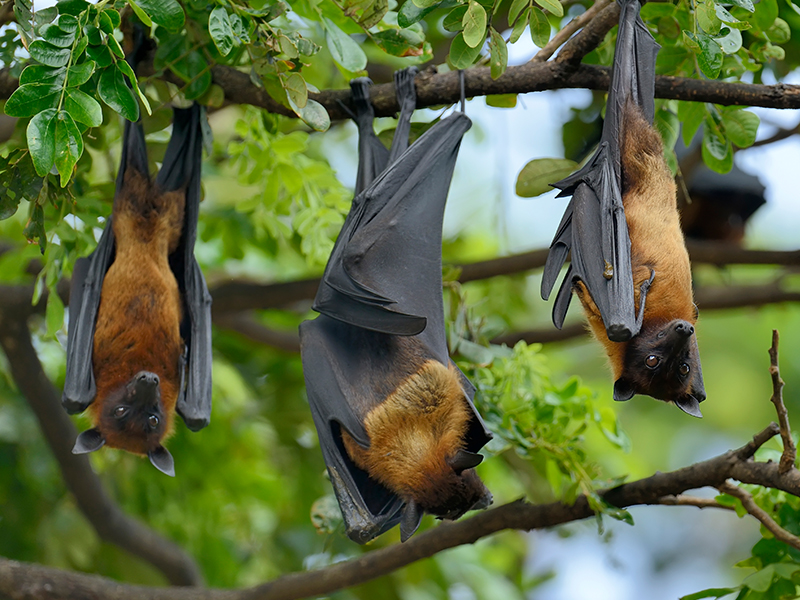
In our study, published in January in the journal Science, we found a subgroup of nerve cells in the hippocampus of bats that help them identify the location of their companions. These nerve cells, which we called "social place cells", probably underlie the social-spatial perception of mammals, including humans. For bats, as for humans, it is important to know where other bats are, for example in order to keep their distance from an alpha (dominant) male, or to know when to approach members of the opposite sex.
More articles on the subject
• The people who cannot connect with others, talk and communicate, 02.2015 (this article is available to subscribers only)
• How does the brain suppress a traumatic memory? 11.2014
We divided eight Egyptian fruit bats into four pairs of "student" and "teacher" and placed them in a controlled flight room. In each trial, the student watched the teacher fly at random to one of two feeding stations and back to the starting point, and after a delay of a few seconds, it retraced the teacher's flight path and was rewarded with a piece of fruit if it succeeded in the task. The teacher was an alpha male, so when it flew to eat, the student "showed it respect" and did not fly with it at the same time. Throughout the experiment, the electrical activity (electrical pulses) of nerve cells in the students' hippocampus was recorded, using miniature wireless equipment that we developed in our lab and attached to their heads. In this way, we were able to record and measure the electrical activity of 378 nerve cells in the sub-region of the hippocampus where O'Keefe's place cells were discovered.
We found that when the students navigated their way, their place cells sent pulses to the rest of the brain, in other words, they communicated with it about their location. But there were also cells that were active (sent pulses) when the students stayed in place and only watched the teachers fly, and we classified these as "social place cells". To check whether these really are cells that help track members of the group, rather than any movement at all in space, we repeated the experiment with objects that we moved from place to place in a way that mimicked the teachers' flight. We found that some of the social place cells also responded in this situation, but some did not, meaning they were active only in response to the movement of the other bat. We therefore concluded that they are activated only in a clearly social context.
Our study shows that the hippocampus is probably involved not only in navigating physical space but also in more complex cognitive functions, such as navigating space socially, and perhaps even the ability to move toward social goals. For example, within the group hierarchy of a bat colony: understanding who is against whom, who it is worth teaming up with, and so on. In humans, this ability of the hippocampus may be expressed, for example, in understanding the hierarchical structure of the workplace and navigating within it.
This opens a window onto many follow-up questions: for example, how will social place cells work in situations with many participants? Will they respond to a bat that is close to them, or perhaps to one of higher social status? We are now beginning to examine these and other questions by recording the brain activity of bats in a bat colony at the Weizmann Institute.
These questions and our new study may also have implications for understanding the human hippocampus, which probably also contains the social place cells we identified in bats, and how it functions in everyday situations; for example, how we are able to hold a conversation while keeping track of where the child, the boss or our partner is. And also in pathological situations: it is possible, for example, that damage to social place cells is what often prevents Alzheimer's patients from recognizing those close to them, or causes some of the symptoms of autism. In summary, our study and the questions that come with it point to new directions for researching the social role of the hippocampus.
Nachum Ulanovsky is a professor of brain research in the Department of Neurobiology at the Weizmann Institute of Science.